


Body piercing - all types
Body piercings differ from ear and facial piercings in one key feature: much longer and more unpredictable healing. The navel and nipple are pierced by a moving fold of skin that is constantly stretching and rubbing against clothes, hence healing takes months, not weeks. Microdermal and surface piercing, on the other hand, are surface piercings in which the jewelry does not pass through the tissue, which gives a lot of freedom in positioning, but also increases the risk of being pushed out.

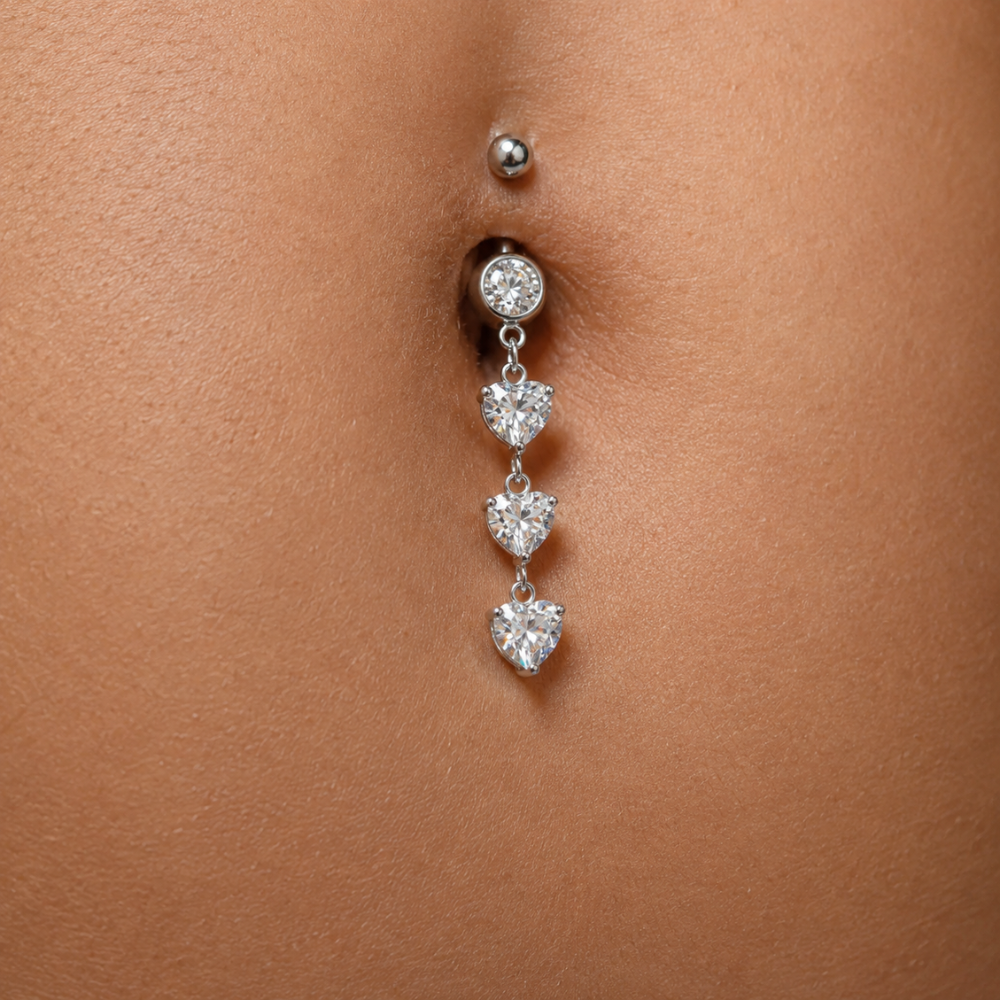
Navel piercing
The most popular body piercing - through a fold of skin above or below the navel. The biggest mistake is changing jewelry to decorative jewelry too early, before the tissue inside the canal is fully formed.

Nipple piercing
A piercing with high tissue mobility and constant friction against clothing, which prolongs healing - one of the longer healing periods of all types of piercings.

Microdermal (dermal)
It differs from other body piercings in that it is not done through. It is a small anchor embedded under the skin, with only a decorative head visible on the surface. Thanks to this, it can be placed almost anywhere on the body: neckline, neck, hand, and around the ribs.

Surface piercing
Surface piercings in areas with flat tissue. The jewelry passes shallowly through the skin fold, without an exit point through the deeper anatomical structure. This is the highest risk of migration and extrusion of all the piercing types described in this atlas. This especially applies to locations exposed to friction with clothing (hip, neck under the collar).


